
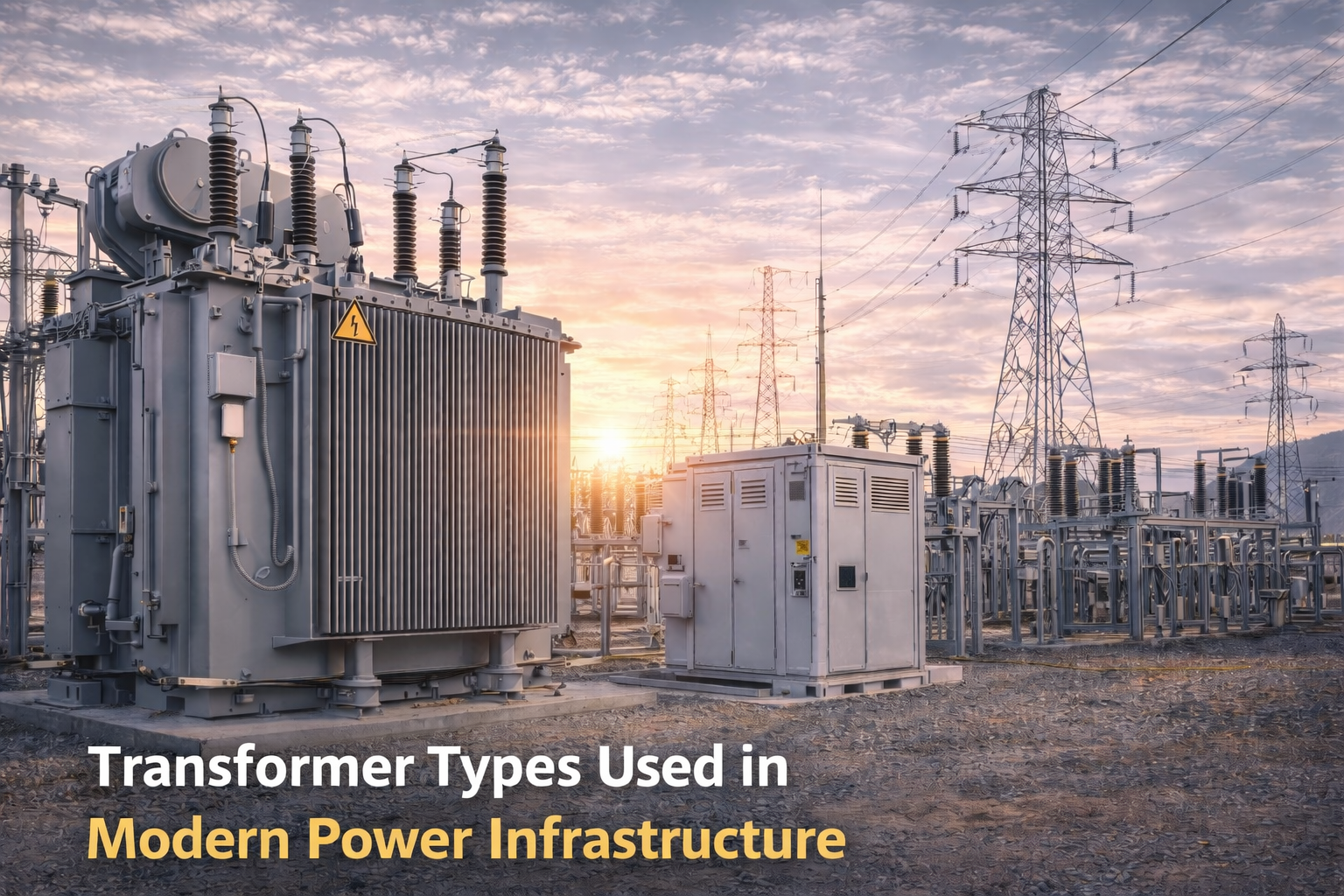
Transformer Types Used in Modern Power Infrastructure
Introduction
Transformers are one of the most critical components of modern power infrastructure. From large utility substations to renewable energy projects, transformers play a central role in transmitting and distributing electricity safely and efficiently.
As global demand for reliable energy infrastructure continues to grow, the need for high-quality transformer solutions is increasing across industries including utilities, renewable energy developers, and EPC contractors.
Understanding the different types of transformers used in power systems is essential when designing or sourcing equipment for energy infrastructure projects.
What Is a Power Transformer?
A transformer is an electrical device that transfers electrical energy between circuits while adjusting voltage levels. This allows electricity generated at power plants to be transmitted over long distances and then reduced to safe levels for industrial and residential use.
Transformers are used throughout the power grid, including in:
• generation plants
• substations
• renewable energy farms
• industrial facilities
• distribution networks
Major Transformer Types
Power Transformers
Power transformers are used in transmission networks where electricity is moved over long distances at very high voltages. These transformers are typically installed in major substations and utility infrastructure.
They are designed for high efficiency and continuous operation.
Distribution Transformers
Distribution transformers reduce high transmission voltages to lower voltages suitable for local power distribution.
These transformers are commonly found in:
• urban substations
• commercial facilities
• industrial plants
• residential power networks
Dry-Type Transformers
Dry-type transformers use air instead of oil for cooling and insulation. They are often used in indoor environments where fire safety is critical.
Common applications include:
• commercial buildings
• hospitals
• industrial facilities
• renewable energy installations
Oil-Immersed Transformers
Oil-immersed transformers use insulating oil for cooling and electrical insulation. These transformers are commonly used in large outdoor installations and high-voltage systems.
They are known for their durability and efficiency in heavy industrial environments.
Transformers in Renewable Energy Projects
Renewable energy installations require specialized transformer solutions to connect solar or wind generation to the power grid.
Typical transformer applications include:
• solar farm grid connections
• battery energy storage integration
• wind energy transmission systems
These transformers ensure electricity generated by renewable sources can be safely integrated into existing grid infrastructure.
Global Supply of Transformer Equipment
As energy infrastructure projects expand worldwide, EPC contractors and project developers increasingly rely on global supply networks to source transformer equipment efficiently.
Through international procurement platforms such as GreenGrid, project developers can connect with verified transformer manufacturers and compare equipment specifications and supplier options.
This approach improves procurement transparency while helping energy projects reduce costs and improve supply chain efficiency.
Conclusion
Transformers remain a cornerstone of modern power infrastructure. Whether used in utility-scale transmission networks, renewable energy installations, or industrial power systems, transformers ensure electricity can be delivered safely and efficiently.
As the global energy sector evolves, reliable transformer supply chains will continue to play a critical role in supporting the expansion of modern power infrastructure.
Add comment