How EPC Companies Reduce Energy Infrastructure Costs by Sourcing Directly from Manufacturers
Introduction
Engineering, Procurement, and Construction (EPC) companies are under increasing pressure to deliver energy projects faster and at lower cost. From solar farms and battery storage installations to grid infrastructure upgrades, equipment procurement represents one of the largest portions of project budgets.
One of the most effective ways EPC contractors reduce costs and improve project efficiency is by sourcing equipment directly from manufacturers rather than relying solely on traditional distribution channels.
Platforms like GreenGrid are transforming how energy infrastructure equipment is sourced by connecting buyers directly with verified manufacturers.
The Challenge of Traditional Procurement
Traditional procurement methods often involve multiple intermediaries. While distributors and resellers can provide convenience, they also add additional margins that increase the final equipment cost.
For large-scale projects involving transformers, battery storage systems, switchgear, and solar infrastructure, these added costs can significantly impact project profitability.
Common challenges EPC companies face include:
• inflated equipment pricing
• long procurement timelines
• limited manufacturer transparency
• communication barriers with suppliers
These factors make efficient procurement strategies increasingly important.
The Advantage of Direct Manufacturer Sourcing
Direct sourcing allows project developers and EPC companies to access factory-level pricing and work directly with the manufacturers producing the equipment.
Key benefits include:
Lower Equipment Costs
By eliminating unnecessary intermediaries, EPC companies can significantly reduce procurement costs.
Faster Communication
Direct communication with manufacturers allows faster clarification of technical specifications, customization requirements, and project timelines.
Better Equipment Customization
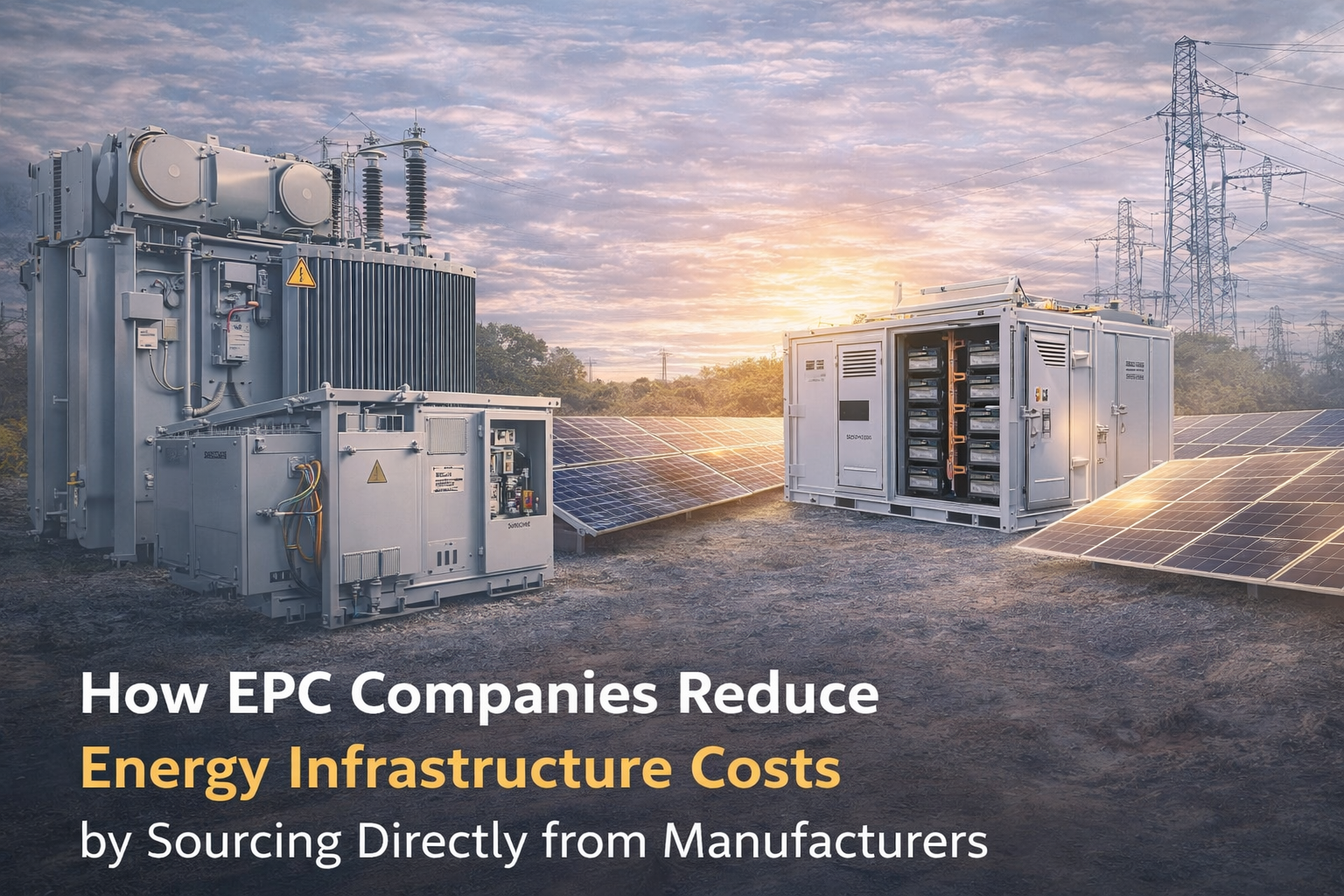
Manufacturers can tailor solutions to specific project requirements such as voltage ratings, containerized BESS configurations, or transformer capacity.
Improved Supply Chain Transparency
Working directly with verified suppliers ensures buyers understand exactly where their equipment is coming from.
Key Equipment Categories in Energy Infrastructure Projects
Energy infrastructure projects typically require multiple types of specialized equipment. Through global supply networks, EPC companies can source equipment such as:
Transformers
Oil-immersed and dry-type transformers used in substations and grid infrastructure.
Battery Energy Storage Systems (BESS)
Containerized storage systems used for grid stabilization, renewable integration, and commercial energy management.
Switchgear
Medium- and high-voltage switchgear used in substations and distribution networks.
Solar Infrastructure
Solar panels, mounting systems, and associated electrical components.
How GreenGrid Simplifies Global Procurement
GreenGrid connects buyers with verified manufacturers across the energy infrastructure supply chain. Through the platform, project developers can compare suppliers, request quotations, and communicate directly with manufacturers.
GreenGrid supports sourcing for equipment including:
• transformers
• battery energy storage systems
• switchgear
• cables
• solar equipment
The platform also assists with supplier coordination and international logistics, helping EPC companies streamline the procurement process.
Conclusion
As energy infrastructure projects continue to grow worldwide, efficient procurement strategies are becoming essential for project success.
By sourcing equipment directly from verified manufacturers, EPC companies can reduce costs, improve supply chain transparency, and accelerate project timelines.
Digital procurement platforms such as GreenGrid are playing a key role in modernizing the global energy supply chain.

Add comment