Introduction
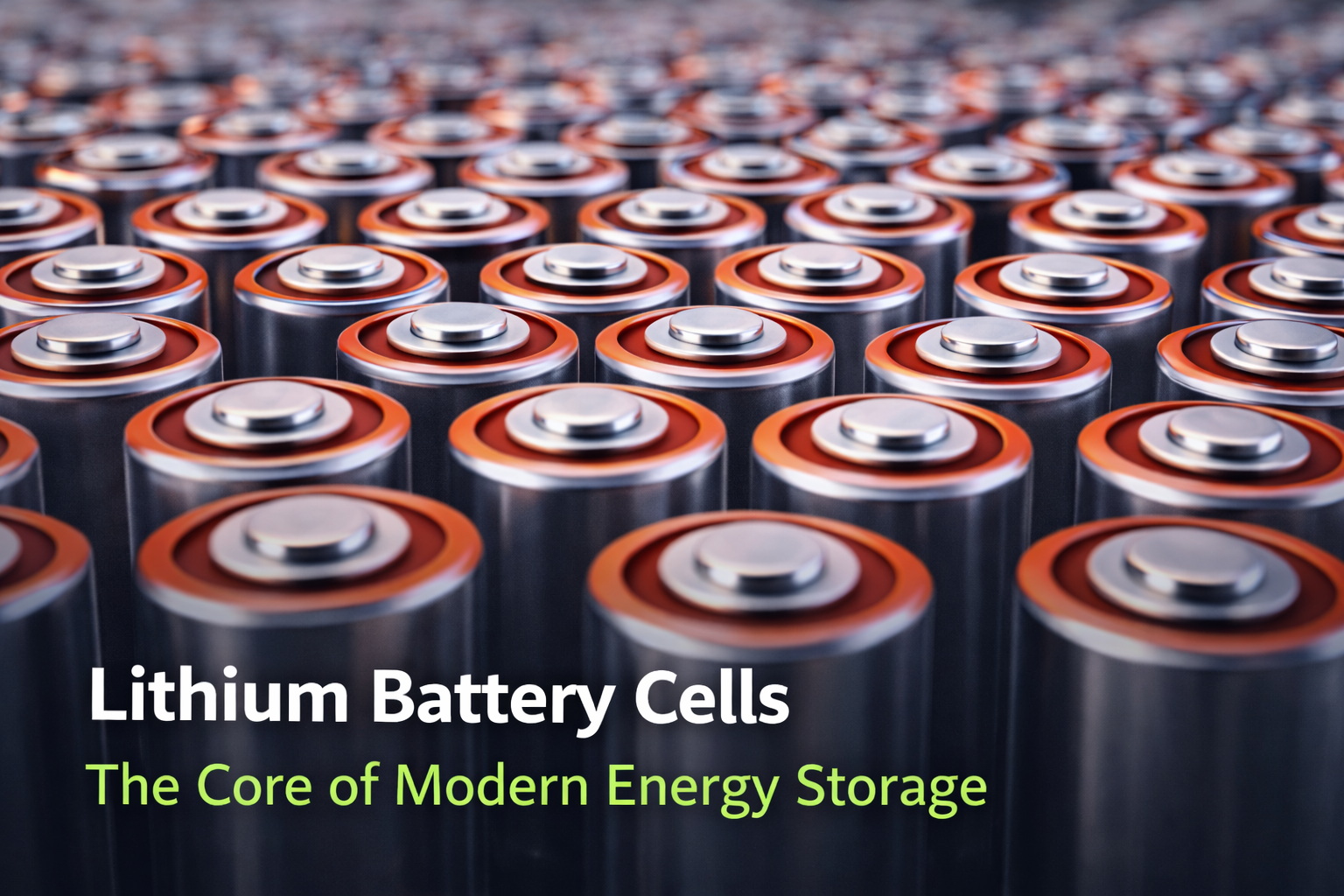
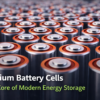
Lithium battery cells are the fundamental building blocks of modern energy storage systems. From electric vehicles to grid-scale battery energy storage projects, lithium-based battery technology has become the preferred solution for storing and managing electrical energy.
As global demand for energy storage continues to rise, the production and supply of high-quality lithium battery cells has become a critical part of the energy infrastructure supply chain.
What Is a Battery Cell?
A battery cell is the smallest unit of a battery that can store and release electrical energy. Multiple battery cells are connected together to form battery modules, which are then combined into battery packs used in large energy storage systems.
Each cell contains:
• a cathode
• an anode
• electrolyte
• separator
These components work together to allow the controlled movement of lithium ions during charging and discharging.
Types of Lithium Battery Cells
Different lithium battery chemistries are used depending on the application.
Lithium Iron Phosphate (LFP)
LFP battery cells are widely used in energy storage systems due to their safety, long lifespan, and thermal stability. They are commonly found in grid-scale storage projects and commercial energy systems.
Nickel Manganese Cobalt (NMC)
NMC cells offer higher energy density and are often used in electric vehicles and applications where compact storage capacity is important.
Lithium Titanate (LTO)
LTO batteries are known for extremely fast charging and long cycle life, though they are typically more expensive than other lithium battery technologies.
Battery Cells in Energy Storage Systems
In large-scale energy storage systems, thousands of battery cells are combined into modules and racks to achieve the required storage capacity.
These systems are designed to store electricity generated from renewable sources and release it when needed, helping stabilize the grid and balance supply and demand.
Battery cell quality, consistency, and manufacturing standards play a major role in the performance and lifespan of these systems.
Global Manufacturing of Battery Cells
The majority of lithium battery cell production currently takes place in Asia, where large-scale manufacturing facilities have been developed to meet the growing demand for energy storage technology.
These manufacturers supply battery cells for:
• utility-scale energy storage projects
• renewable energy integration
• electric vehicle production
• industrial energy systems
Reliable supply chains are essential for ensuring consistent access to high-quality battery cells for global energy infrastructure projects.
The Future of Battery Cell Technology
Battery technology continues to evolve rapidly, with manufacturers investing heavily in improving energy density, safety, and lifecycle performance.
New battery chemistries and manufacturing methods are expected to further reduce costs while increasing storage capacity and system reliability.
As energy storage becomes more important for global energy systems, lithium battery cells will remain at the center of modern power infrastructure development.
Add comment